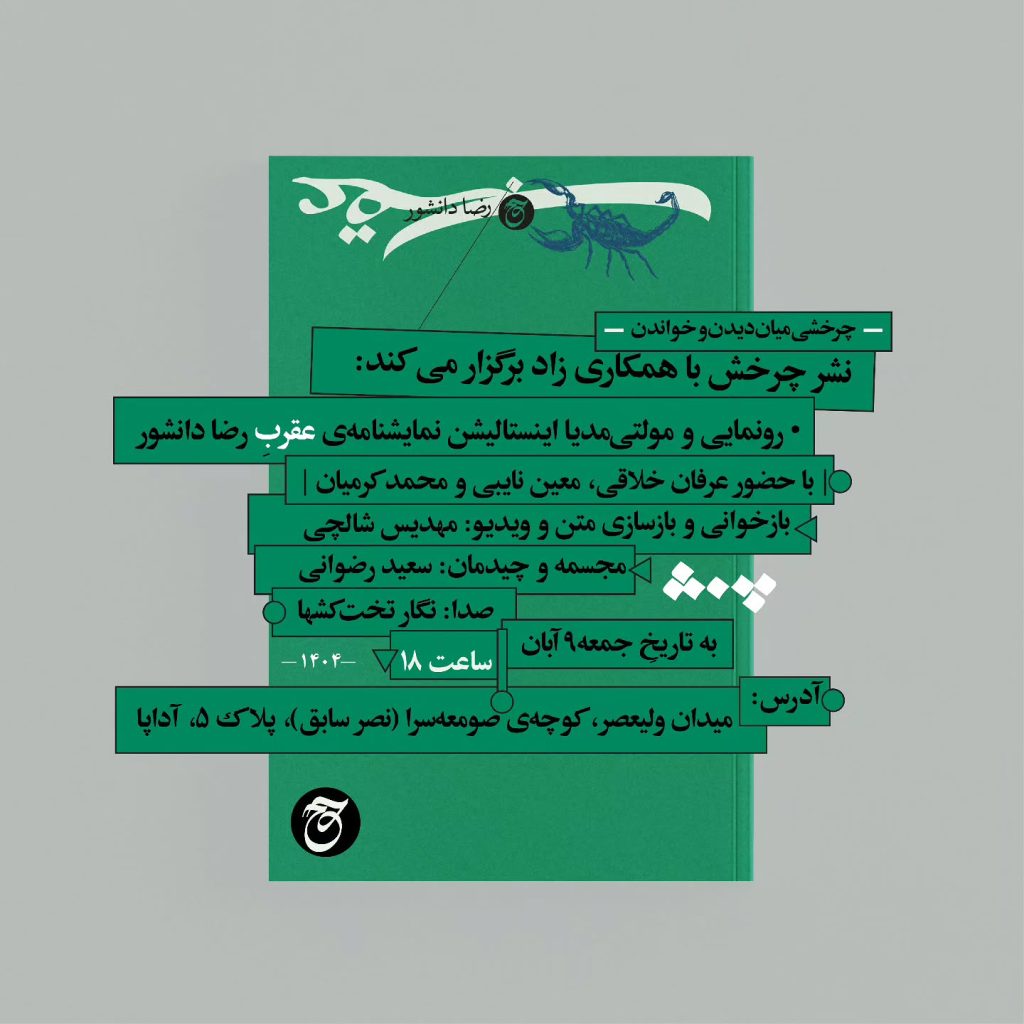
The Scorpion Project: An Installation at Adapa Gallery
The play “Scorpion” by Reza Daneshvar, completed in the summer of 1969, was published in limited and unofficial copies years after the author’s death. This publication served as the starting point for a multimedia installation at Adapa Gallery to reread the social history, hidden violence, and power relations interwoven in a family’s structure. The play narrates the story of major landowners whose world collapses with the implementation of land reforms. Bahr al-Olum, the family’s grandfather, betrays his leftist grandson, Asad, to preserve his properties. Asad flees with Aliyeh, the bailiff’s daughter, and this escape unveils a repressed secret; Aliyeh is actually the result of the grandfather’s rape of a maid who had hanged herself years ago.
Upon Asad’s return after ten years, he faces a house devoid of its former authority, the loss of lands, and Aliyeh’s confinement in a mental asylum; a trajectory that transfers revenge and violence across generations. Daneshvar explicitly states the time and place in this work: “The time of the event is this very era.” The lands of Darreh Sefid and Ganjabad, alongside urban spaces such as the school, asylum, mosque, and bazaar, transform into a historical geography accumulating class memory. Ownership in “Scorpion” is tied to bodily control and hierarchy; a structure where Bahr al-Olum’s patriarchal authority and its consequences devour the lives of subsequent generations.
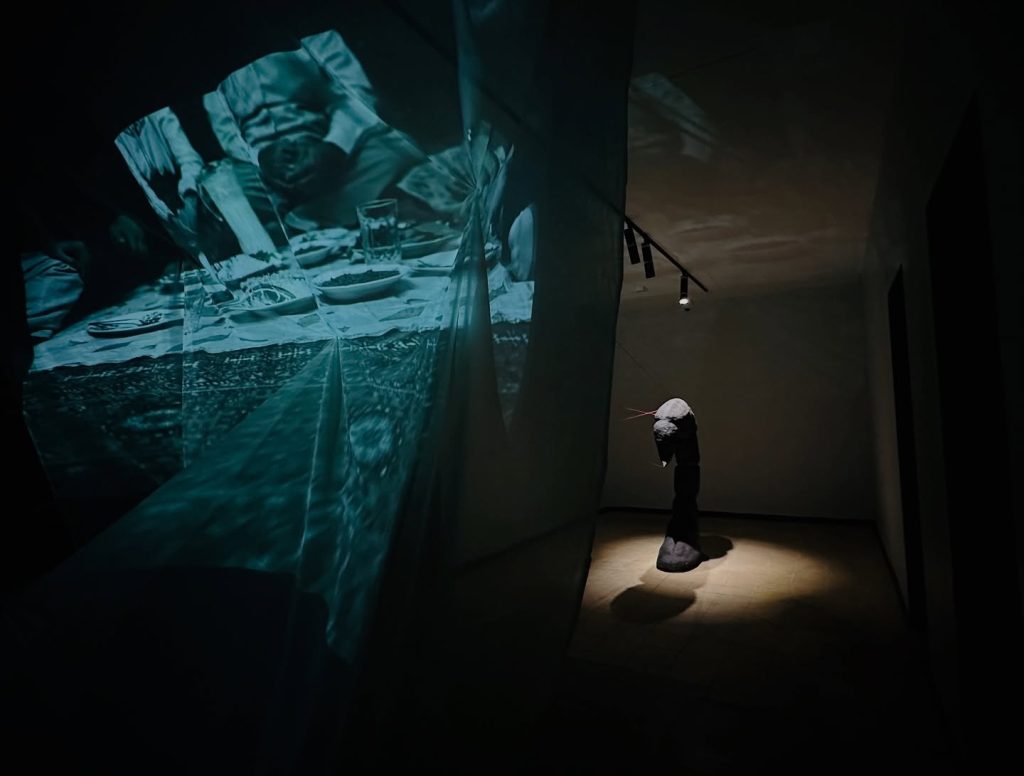
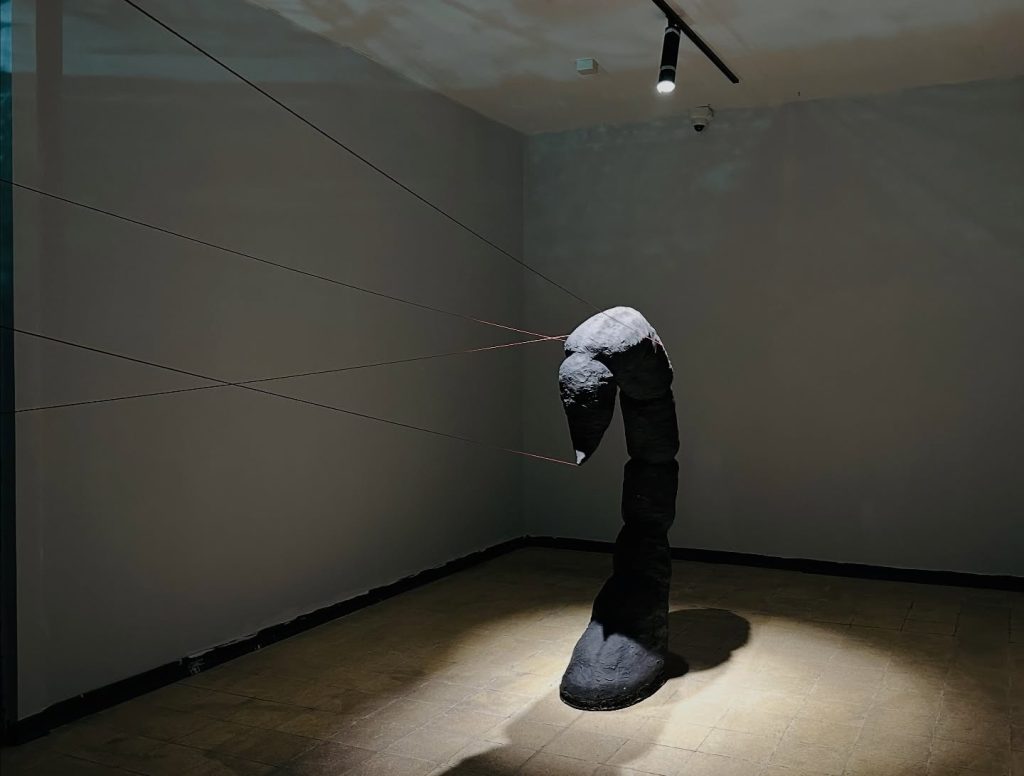
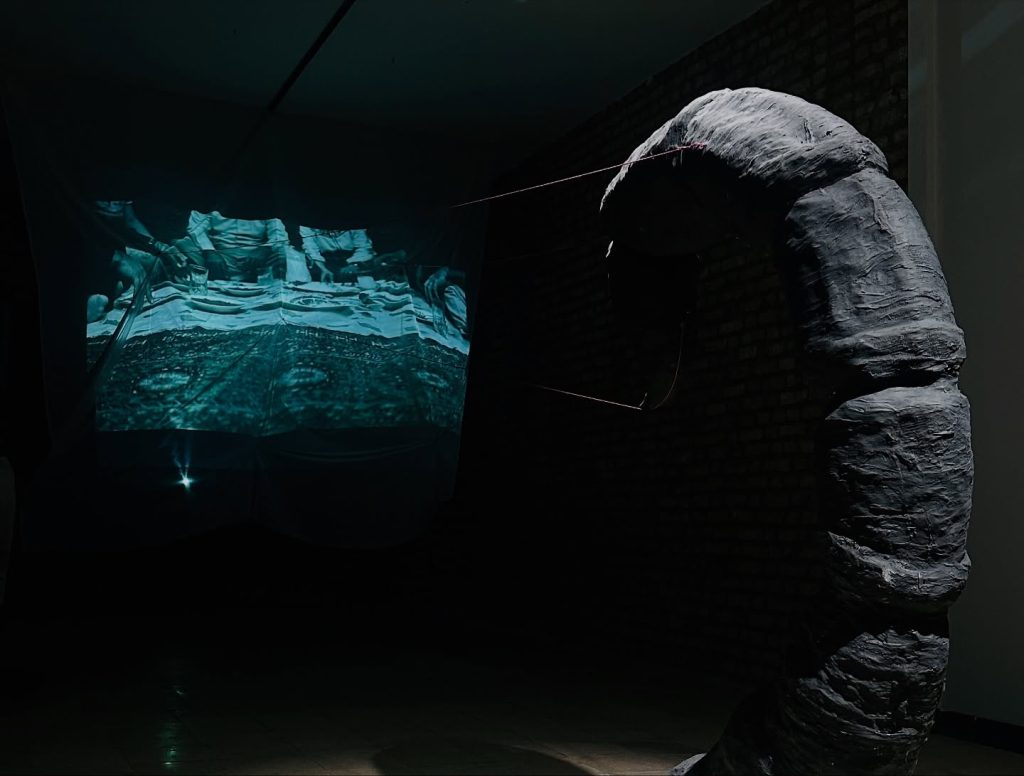
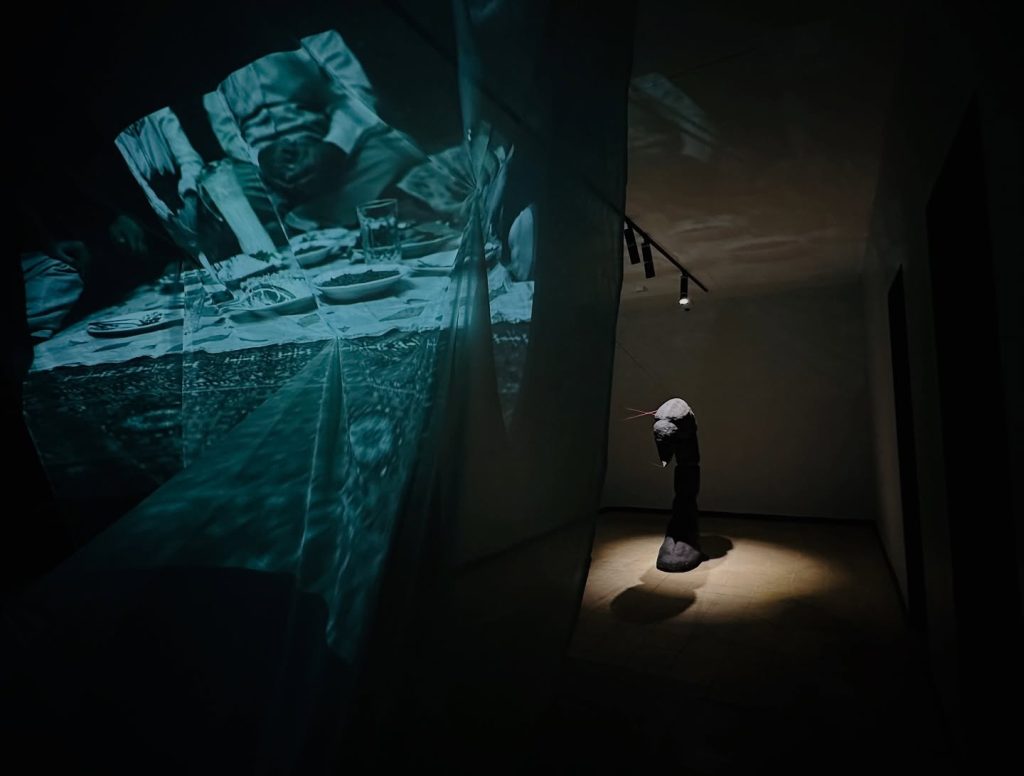
The genesis of this installation, exhibited at Adapa Gallery from October 31 to November 7, 2025, was a close reading of the text and its connection to lived experience. In “Scorpion”, the political flows through silences, everyday routine, and suspended states. The incompleteness of actions and the castration of characters reflect living under the shadow of these power structures. In the gallery space, attaching the image of a scorpion’s tail to the main image creates a metaphor for this continuous wound. The combination of threads with a video of daily life and the incomplete actions of figures at a dining spread where the absence of victims is palpable, alongside the sounds of cutlery and whispers, creates an audio-visual space to reflect the persistence of the past and the repetition of control.